The winding, historic streets of Devon hold many secrets, but few places carry a weight quite like the town of Bideford. For anyone walking the path of traditional folk magic, this corner of England is a sacred, somber, and deeply powerful landscape. It is the setting of a dark turning point in history, the home of Temperance Lloyd, Mary Trembles, and Susanna Edwards, the three women recognized as the last individuals executed for witchcraft in England.
I have been spending this week staying right here in Bideford on holiday, soaking in the coastal air and walking the very hills where these women once gathered herbs and lived their lives. Being physically present in this landscape changes how you connect with the history. It bridges the gap between words in an old book and the reality of the soil beneath your boots.

The Bideford Three: The End of the Burning Times
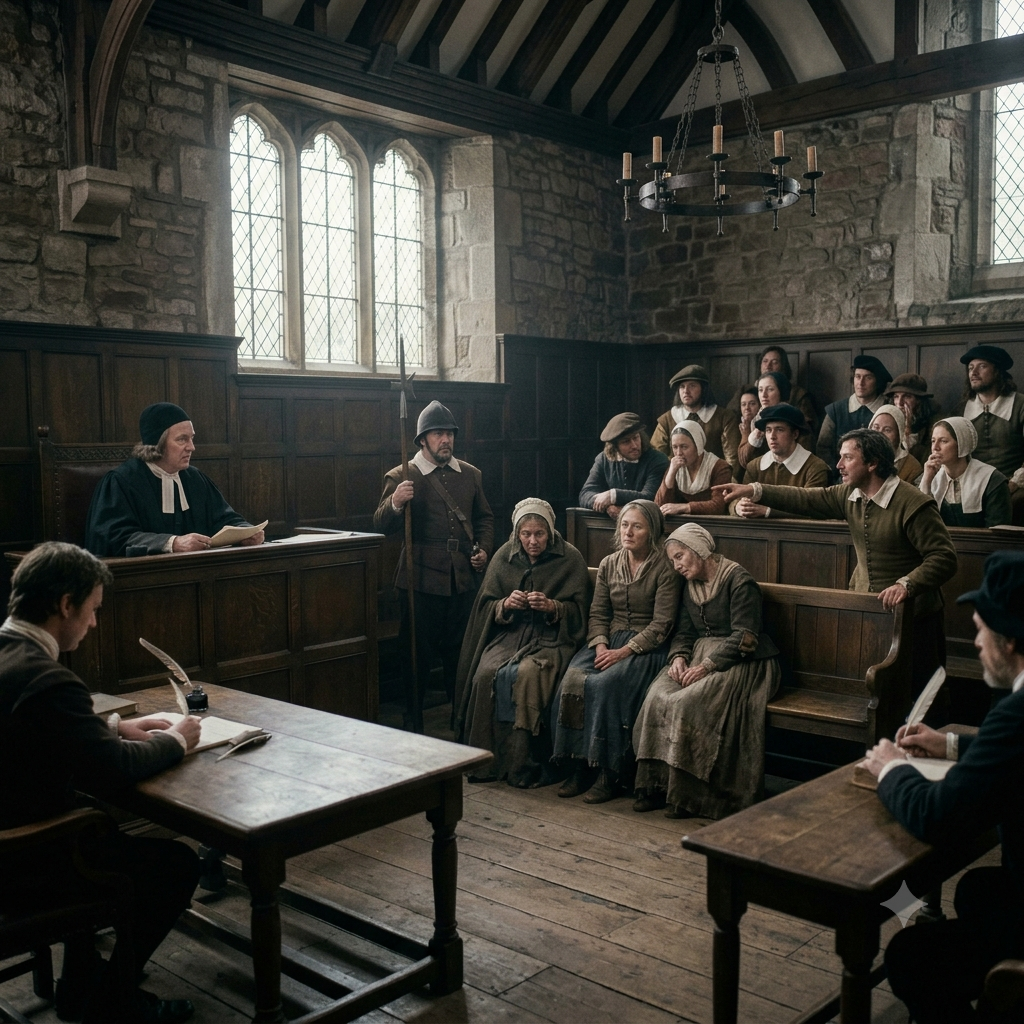
To understand the magic of Bideford today, we must look back to the summer of 1682. The English witch trials were largely winding down, but suspicion, poverty, and fear still gripped the local communities. Temperance Lloyd, a poor widow living on the margins of Bideford society, became the target of rumours when a local shopkeeper fell ill. She was seen at his house at the same time a magpie flew in the window. Villagers believing the magpie signified a death also believed it was Temperance’s familiar, pointed the finger at her.
In a time of desperation, the marginalised often turned to cunning crafts or simple herbalism to survive, but the line between a helpful charm and a perceived curse was terrifyingly thin. Temperance was accused of practising maleficium, using magic to cause harm. Soon after her arrest, suspicion spread like wildfire, drawing in Mary Trembles and Susanna Edwards, two equally vulnerable women who relied on begging and mutual support to stay alive.
The accusations against them read like a classic grimoire of moral panic. They were accused of communing with the devil in the form of a black man, shape shifting into cats, and consuming the life force of their neighbours. Under intense psychological pressure, isolation, and grueling interrogation, the women confessed.
They were taken from Bideford to the Exeter Assizes, where they were found guilty. On August 25, 1682, Temperance, Mary, and Susanna were hanged at Heavitree Gallows. They went to their deaths protesting their innocence of the worst crimes, yet praying for mercy in a world that had utterly failed them.
A Pilgrimage of Remembrance
During my holiday here, I made a point to visit the local museum to see the historical records firsthand, tracing the timeline of the panic that gripped this town over three centuries ago. But the most moving part of the trip was standing before the plaque erected in memory of the three women.
You will notice a fourth name alongside the three, that of Alice Molland. The Mystery of the Final Execution
While Temperance Lloyd, Mary Trembles, and Susanna Edwards are famous for being the last mass execution in 1682, old court records from the Exeter Assizes show that an Alice Molland was condemned to death just a few years later, in 1685.
Like the Bideford women, she was imprisoned in Exeter Castle and ultimately hanged at the Heavitree Gallows.
A ghost in the archives
What makes Alice Molland so unique to historians and folk practitioners alike is how little we actually know about her. Unlike the Bideford witch trials, which were highly publicised and thoroughly documented in popular pamphlets of the time, Alice’s case has almost no surviving paperwork.
We do not have the details of who accused her, what specific maleficium (harmful magic) she was alleged to have performed, or what her life was like in Devon. She exists almost entirely as a single, devastating entry in the court’s execution records. Because of this, she is often viewed by modern folk witches as a symbol of the nameless ancestors of the craft, those thousands of ordinary people who were caught up in the panic of the era but whose full stories were completely lost to time.

Standing there, it becomes incredibly clear that Bideford is no longer a place of hidden shame. The plaque stands as a public testament to their innocence and a permanent reminder of what happens when fear overrules compassion. Leaving a small token of respect at the site felt like a vital act of modern folk magic, a way to settle the heavy, unquiet history of the town.
Reclaiming the Soil: The Witches of Bideford Today
Today, Bideford is not just a place of historical tragedy. It is a town where the roots of the craft are being actively reclaimed. The memory of the Bideford witches is honoured not with fear, but with respect, remembrance, and a thriving community of modern practitioners.
If you visit Bideford now, you will find a vibrant, deeply respectful community of modern witches, pagans, and folk practitioners. The modern craft here is deeply animistic and connected to the landscape. It is rooted in the salty air of the Torridge estuary, the rich mud of the banks, and the ancient woods of North Devon.
Modern Devon witches like Dr Rebecca Beattie are healers, artists, herbalists, and historians. There have been dedicated local campaigns to secure official pardons for Temperance, Mary, and Susanna, shifting the narrative from one of guilt to one of historical injustice. The magic here today is not hidden away in dark corners. It is practised openly in the reclamation of local plant lore, the honouring of the land spirits, and the fierce protection of the vulnerable, ensuring that the isolation which destroyed the Bideford Three never happens to a solitary practitioner again.
When we learn about the Bideford witches, we are doing more than reading a history lesson. We are connecting with our spiritual ancestors. These women were not practitioners of high ceremonial magic, they were ordinary people caught in an extraordinary storm of human cruelty. When you honour them, you honour the resilience of all those who came before us, those who held the knowledge of the root, the bone, and the hearth when it was dangerous to do so.
A Folk Ritual for Remembrance and Protection
This week, we honour the memory of Temperance, Mary, and Susanna by casting a shield of protection over ourselves and our magical community, ensuring our voices remain strong and our practices remain safe.
What you will need:
A small piece of dark thread
A sprig of rosemary for remembrance
A sprig of rowan or rosemary for protection
A small piece of paper with the names Temperance, Mary, and Susanna written upon it

The Practice:
Sit quietly in the evening light. Lay the paper with the names of the Bideford witches before you. Place the sprig of rosemary on top of their names, acknowledging the hardships they faced and thanking them for the path they inadvertently cleared for us to practise freely today.
Take your protective herb and your dark thread. Begin wrapping the thread around the herb, winding it tightly clockwise. As you wrap it, visualise a strong, impenetrable boundary forming around your own life, your home, and your craft. You are binding away malice, gossip, and the harsh judgments of the outside world.
Hold the wrapped herb to your heart and say a quiet thank you to the ancestors of the land. Bury the paper and the herbs in the earth near your threshold to anchor that protective energy into the soil.
The deed is laid, the anchor is dropped, and the work is sealed. By my Words and by the Root, as it’s my will so it shall be.
Take care of yourselves, and goodbye until next time x